Native App
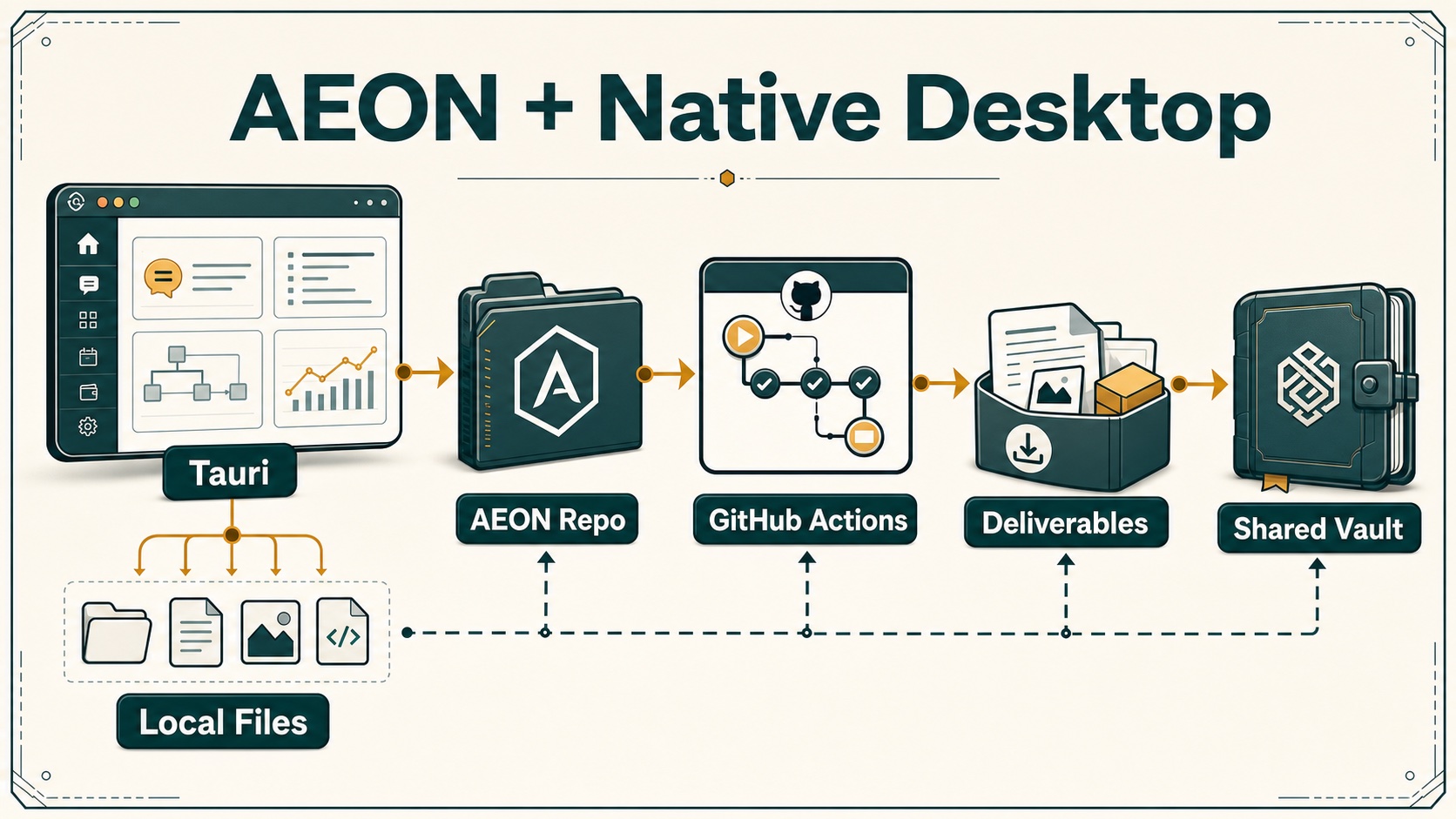
HivemindOS has a Tauri desktop target.
It runs the same Next.js dashboard in a native window without taking over Liam’s managed port 5020. The goal is not to fork the product. The goal is to give This Mac better local file and setup access while keeping the browser app fully supported.
Phase 1
Run the native development shell:
pnpm tauri:dev
This starts the shared Next.js app behind the Tauri loading proxy on http://127.0.0.1:5021 and opens it in a Tauri window. The proxy chooses an isolated internal Next.js backend port starting at 5121, so stale backend processes do not corrupt a fresh dev run. The normal browser dashboard still uses:
pnpm dev
which defaults to http://localhost:5020.
Phase 2
Build the packaged native app:
pnpm tauri:build
Phase 2 keeps the browser and native app on the same Next.js codebase. The browser version still serves the full Next app and API routes through pnpm dev / pnpm build.
Phase 3
Packaged native builds now default to a static Tauri UI:
pnpm tauri:prepare
The prepare step exports the shared dashboard React app into src-tauri/static, prunes bulky browser-only icon/source assets, keeps Lottie animation assets, and does not bundle the standalone Next server or a Node.js runtime. In release builds, the Rust shell loads the static webview directly and reports phase-3-static from desktop_status.
Opening the packaged app does not auto-run setup.sh or install.sh. The first-run setup wizard checks local capabilities from native code, asks the user how to install the hive, detects agent runtimes, lets skills and memory imports be selected independently, then opens an explicit Terminal command only after the user approves it. That terminal setup path runs setup.sh --interactive ..., so it can prompt for GitLawb Code Proof CLI and DID preparation. It does not silently start a full GitLawb node or install Docker/Postgres.
For debugging only, the old embedded Next server package can still be generated:
HIVEMINDOS_TAURI_EMBEDDED_NEXT=1 pnpm tauri:prepare
That fallback builds a standalone Next.js server into src-tauri/resources/hivemindos-next and copies the active local Node.js runtime into src-tauri/resources/hivemindos-node. In release builds the Rust shell detects those resources, starts the bundled server on an ephemeral 127.0.0.1 port, then navigates the native window to it.
The generated src-tauri/resources contents are ignored by git and rebuilt for each package. Keep new feature code shared by putting platform differences behind small adapters instead of forking browser and desktop views.
The static and embedded builds are bounded by TAURI_NEXT_BUILD_TIMEOUT_SECONDS and default to 1800 seconds. Static export hides src/app/api only during the export so API routes remain available for the browser app and embedded fallback.
Native Bridge
The desktop shell exposes a narrow command surface for operations that should be native on This Mac:
| Command | Frontend helper | Purpose |
|---|---|---|
desktop_status |
getNativeAppVersion |
Read build commit, branch, dirty flag, runtime phase, native host, and native server port |
list_local_directories |
listNativeLocalDirectories |
Browse local directories without routing through the collector |
create_local_folder |
createNativeLocalFolder |
Create a local child folder after validating and cleaning the requested name |
display_local_path |
displayNativeLocalPath |
Normalize local paths for display |
native_setup_status |
readNativeSetupStatus |
Detect setup prerequisites and local agent runtimes for the first-run wizard |
native_setup_run |
runNativeSetup |
Open a user-approved Terminal command that runs setup.sh with selected wizard options |
The wizard delegates Code Proof preparation to setup.sh: macOS/Linux users can accept the GitLawb CLI and DID prompts in the opened terminal, while full local node hosting remains a later Integrations/project-linking action.
The browser path remains fully supported. Frontend code calls native helpers only when Tauri is detected and the target collector URL is local. Remote machines still use Hivemind Link or collector directory APIs, so local native privileges are never confused with remote access.
Current consumers include AEON workspace clone/link flows, chat folder creation, scheduler folder browsing, Kanban linked directories, and shared machine-aware directory picking.
Safety Notes
- Port
5020remains reserved for the managed browser dashboard. - Phase 1 development uses
5021. - Phase 3 packaged builds load static UI directly.
- Embedded fallback packaged builds use an ephemeral localhost port.
- Generated resources are rebuilt, ignored, and scrubbed of local
.env*files. - Native filesystem helpers are intentionally directory scoped and local. Remote browsing stays behind collector APIs.